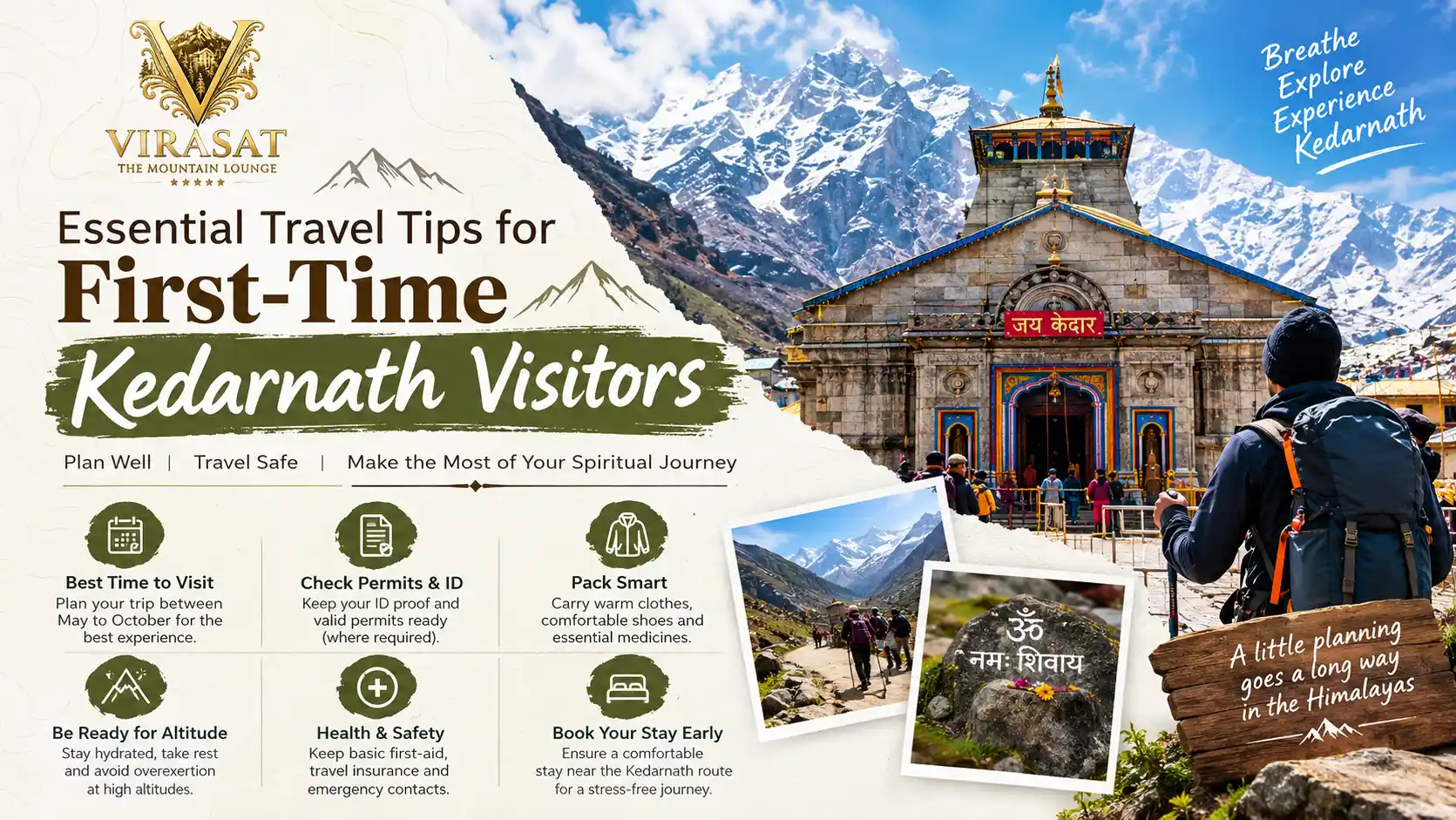
Essential Travel Tips for First-Time Kedarnath Visitors
We all come to a stage where no matter how much we sleep, we still feel tired, or where our body is unable to spring back into action as it once did.
Planning your first trip to Kedarnath? You're not alone in feeling a mix of excitement and "where do I even start." Kedarnath isn't just another hill station trip — it's a high-altitude pilgrimage that demands real planning, from your fitness prep to what you pack in your bag. This guide brings together the essential travel tips every first-timer needs, written the way we'd explain it to a friend, not a brochure.
Whether you're trekking up on foot, riding a pony, or booking a helicopter, this Kedarnath travel guide covers everything — permits, weather, packing, altitude sickness, and the best places to stay nearby.
Quick Answer: What Should First-Time Kedarnath Visitors Know?
If you only have two minutes, here's the short version:
Kedarnath Temple is open only from late April/early May to early November (exact dates change yearly based on Akshaya Tritiya and Bhai Dooj).
The trek from Gaurikund to Kedarnath is about 16 km one way, and it's steep in patches.
Biometric registration and a valid ID are mandatory before you start the yatra.
Base yourself in Guptakashi, Sonprayag, or Sitapur the night before — don't try to reach Gaurikund and start trekking the same day.
Pack for cold weather even in summer; temperatures can drop below 5°C at night.
Now let's go deeper into each of these, because Kedarnath Yatra preparation is really about the details.
1. Best Time to Plan Your Kedarnath Yatra
This is the first thing every Kedarnath travel guide should tell you honestly: timing changes everything.
May–June: Pleasant days, cold nights, and the most crowded period since it coincides with school holidays. Book stays early.
July–August: Monsoon season. Landslides and route blocks are common. Not recommended for first-timers unless you're flexible with dates.
September–October: Considered the best window — clearer skies, fewer crowds, and stable weather. Ideal if this is your first Kedarnath pilgrimage.
Early November: The temple closes for winter (Kedarnath ji's Doli moves to Ukhimath). Check the official closing date before you travel.
2. Getting There: Routes and Options
Most journeys start from Rishikesh or Haridwar, followed by a road trip to Sonprayag or Gaurikund.
By road: Haridwar/Rishikesh → Rudraprayag → Guptakashi → Sonprayag → Gaurikund (approx. 210–220 km, 9–10 hours by car).
By trek: From Gaurikund, it's a 16 km trek to Kedarnath. Pony, palki, and porter services are available if walking isn't an option.
By helicopter: Multiple operators run shuttle services from Phata, Sersi, and Guptakashi. Book well in advance — slots fill up fast in peak season and weather delays are common, so keep a buffer day.
3. Kedarnath Trekking Tips for Beginners
If this is your first serious trek, don't panic — thousands of first-timers complete it every year. A few things genuinely help:
Start early, ideally by 6–7 AM, to avoid afternoon fog and rain.
Break the trek into stages mentally — Gaurikund to Jungle Chatti, then Bheembali, then Linchauli, then Kedarnath. Small goals feel easier than one long 16 km number.
Use trekking poles — they genuinely reduce knee strain on the descent.
Don't rush the last 2 km. The air gets thinner and this is where most people struggle.
Ponies and palkis are available, but book through registered counters only, not random touts.
4. Health and Altitude Precautions
Kedarnath sits at roughly 3,583 metres. Altitude sickness is real and doesn't care how fit you are.
Acclimatize for a day in Guptakashi or Sonprayag before the trek if possible.
Carry your regular medications, plus basic ones for headache, nausea, and altitude discomfort (consult your doctor beforehand).
Stay hydrated but avoid alcohol the night before.
If you feel dizziness, breathlessness, or a pounding headache that doesn't ease, stop, rest, and inform the nearest medical post — there are several along the route.
Elderly travelers or those with heart/lung conditions should consult a doctor before planning the trek and consider the helicopter option.
5. Permits, Registration, and Documents
This step trips up a lot of first-timers, so don't skip it.
Biometric registration is compulsory for every pilgrim and can be done online in advance or at registration counters in Sonprayag/Guptakashi.
Carry a government-issued photo ID (Aadhaar, passport, or driving license).
Keep printed copies of your registration — network connectivity is unreliable near the base.
If traveling with elderly parents or children, register them individually too.
6. What to Pack for Kedarnath
Weather here shifts fast, so packing smart matters more than packing light or heavy.
Layered clothing — thermals, a fleece, and a waterproof/windproof jacket
Comfortable, broken-in trekking shoes with good grip
Rain cover or poncho (even outside monsoon, showers happen)
Woolen cap, gloves, and a muffler for early morning cold
Reusable water bottle and energy snacks (dry fruits, glucose biscuits)
Basic first-aid kit and any personal medication
Power bank — charging points are limited past Sonprayag
7. Where to Stay: Choosing Your Base
For most first-time visitors, staying overnight near the base before starting the trek makes the whole trip smoother. Guptakashi, Sonprayag, and Sitapur are the three most practical bases, each about 5–30 km from Gaurikund.
Guptakashi in particular works well because it's a bit removed from the peak-season rush at Sonprayag, has better road connectivity, and gives you a quieter night's rest before an early start.
10 Best Places Near Kedarnath
If you have a couple of extra days, these nearby spots are worth adding to your Kedarnath trip guide:
Guptakashi – Home to the Vishwanath Temple, believed to be where Shiva hid before revealing himself at Kedarnath.
Sonprayag – The confluence of the Mandakini and Basuki rivers; also your last road stop before Gaurikund.
Triyuginarayan Temple – Said to be the site of Shiva and Parvati's celestial wedding.
Ukhimath – The winter seat of Kedarnath ji's Doli, quiet and scenic.
Chopta – Often called "Mini Switzerland," a base for the Tungnath and Chandrashila trek.
Tungnath Temple – The highest Shiva temple in the world, reachable via a moderate trek from Chopta.
Deoria Tal – A pristine lake with reflection views of the Chaukhamba peaks.
Vasuki Tal – A high-altitude lake trek from Kedarnath itself, for those with extra stamina.
Gaurikund – The trek's starting point, with natural hot water springs linked to Goddess Parvati.
Rudraprayag – One of the five sacred river confluences (Panch Prayag) of the Alaknanda and Mandakini.
8. Local Etiquette and Temple Visit Tips
A respectful Kedarnath Temple visit goes a long way:
Dress modestly — full-length, comfortable clothing works best in the cold anyway.
Expect queues, especially during peak morning and evening aarti timings. Early morning darshan usually means shorter waits.
Photography inside the sanctum is typically restricted — check current temple rules on arrival.
Keep some cash handy for donations, prasad, and small local vendors, since digital payments aren't always reliable at this altitude.
9. Common Mistakes First-Timers Make
Underestimating the cold and packing for a regular hill trip instead of high altitude.
Skipping acclimatization and heading straight for the trek after a long overnight drive.
Not carrying printed registration documents.
Ignoring early warning signs of altitude sickness.
Booking last-minute stays during peak season and ending up with limited options.
Frequently Asked Questions
Is Kedarnath trek difficult for beginners? It's moderately challenging due to altitude and distance, not technical climbing. With proper pacing, hydration, and rest breaks, most reasonably fit beginners complete it comfortably.
How many days are needed for a Kedarnath Yatra? Most first-timers plan 4–5 days total, including travel to and from Haridwar/Rishikesh, one acclimatization night, the trek up, darshan, and the trek back.
Is helicopter booking mandatory for Kedarnath? No, it's optional. The trek on foot or by pony is the traditional route; the helicopter is simply a faster, non-trekking alternative.
What is the ideal base town before starting the Kedarnath trek? Guptakashi or Sonprayag are the most commonly preferred bases, offering better rest and easier access to registration counters the next morning.
In Conclusion
A first Kedarnath Yatra stays with you long after the trip ends — but only if the planning doesn't wear you out before the trek even begins. Get your timing right, register early, pack for the cold, and pace yourself on the trail, and the rest of the experience takes care of itself.
If you're looking for a comfortable, well-located stay before your trek, Virasat Lounge offers a peaceful Hotel in Guptakashi with free breakfast, giving you a proper night's rest and a warm meal before you set off on one of the most memorable journeys of your life.
Recent Blogs


